Kabalega Independence Week 2026: Putting Heritage, Coffee, and Enterprise at the Centre of a National Conversation
By KF Communication Team.
There are some legacies that belong to history. Others continue to shape the future.
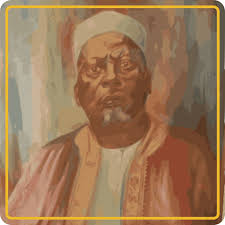
The legacy of Omukama Cwa II Kabalega belongs to the latter. Rooted in the history, identity and cultural heritage of Bunyoro, Kabalega’s story has also become an important part of Uganda’s national heritage—a story of courage, leadership, resilience, self-determination and an enduring commitment to the dignity and interests of his people.
It is in the spirit of this legacy that the Kabalega Foundation will host Kabalega Independence Week 2026 from 7–10 October 2026 in Hoima City, bringing together heritage, enterprise, agriculture, innovation, investment, culture and community in a four-day programme designed to connect Uganda’s past with its future.
The week will culminate on Saturday, 10 October, with the 4th Kabalega Independence Run, targeting 5,000 participants, followed in the afternoon by a cultural serenade celebrating Bunyoro’s heritage, Uganda’s cultural diversity and the spirit of community.
But the Run is only one part of a much larger story.
A legacy that continues to speak to the present
Omukama Kabalega lived at a defining moment in the history of Bunyoro and the wider Great Lakes region. His resistance to colonial expansion and his determination to defend the sovereignty of his kingdom have made him one of the enduring figures in Uganda’s historical memory.
Yet Kabalega’s legacy invites reflection beyond the circumstances of his time. It speaks to questions that remain relevant today: the importance of leadership, the dignity of communities, economic self-reliance, the protection of cultural identity and the responsibility of each generation to build upon what it inherits.
Uganda today faces a very different set of circumstances from those confronted by Kabalega. Yet the fundamental challenge remains familiar: how can a people use the resources, knowledge, institutions and opportunities available to them to create a better future?
For Bunyoro, that question has become particularly significant.
The region is experiencing profound economic and social transformation. Hoima City is emerging as an important urban and commercial centre within the Albertine region, while developments in Uganda’s oil and gas sector are bringing new infrastructure, investment, markets and business opportunities. At the same time, Bunyoro continues to possess considerable potential in agriculture, tourism, manufacturing, services and enterprise.
The story of Bunyoro, therefore, is not simply a story of what has been.
It is increasingly a story of what can be.
Kabalega Independence Week 2026 seeks to bring that story into sharper national focus.
Why coffee, and why now?
At the centre of this year’s conversation is coffee.
Coffee provides a particularly powerful lens through which to consider Uganda’s agricultural transformation because it connects the farmer in the village to businesses, markets and consumers across the world. It connects agriculture to enterprise, production to trade, livelihoods to foreign exchange and local communities to the global economy.
Coffee is Uganda’s leading agricultural export, and its importance to the national economy continues to grow. According to the Ministry of Agriculture, Animal Industry and Fisheries, Uganda exported approximately 7.75 million 60-kilogram bags of coffee valued at about US$2.21 billion in the 2024/25 financial year.
Behind these figures are millions of decisions made every day by farmers, families, cooperatives, traders, processors, exporters and entrepreneurs.
For the Kabalega Foundation, the question is therefore not simply how much coffee Uganda can export. The more important question is how Uganda can continue to build a stronger coffee economy in which farmers produce higher-quality coffee, businesses create more value, young people find opportunities and communities participate more meaningfully in the value chain.
This is particularly relevant to Bunyoro.
The region has the land, communities and agricultural potential to play a stronger role in Uganda’s coffee story. Realising that potential, however, requires more than encouraging farmers to plant coffee. It requires access to quality planting material, better farming practices, knowledge, markets, standards, traceability, value addition and enterprise.
It requires bringing the different parts of the value chain into conversation with one another.
That is what Kabalega Independence Week 2026 intends to do.
From the seedling to the international market
A coffee export begins long before the coffee bean reaches a border.
It begins with a seedling and a farmer.
The quality of that coffee is influenced by the health of the soil, the choice of planting material, farm management, harvesting, post-harvest handling, processing and storage. From there, it moves through a chain of traders, processors, exporters and other businesses before reaching international markets.
Every stage presents an opportunity to improve quality and create value.
It also presents an opportunity to ensure that farmers are better positioned to participate in the benefits generated by the crop.
Increasingly, international coffee markets demand greater transparency around where coffee comes from and how it has been produced. Origin tracing and traceability are therefore no longer issues confined to exporters or international buyers. They are becoming increasingly important to farmers and communities seeking to understand the standards required to participate successfully in modern coffee markets.
Through Kabalega Independence Week, the Foundation intends to support greater community awareness of these issues, helping to bring the conversation about coffee standards, origin and traceability closer to farmers.
The proceeds of the Kabalega Independence Run will contribute towards the mobilisation and distribution of coffee seedlings to farmers in the region, as well as community sensitisation clinics focused on coffee farming standards and related awareness.
In this way, the Run is intended to leave a tangible legacy beyond the day on which thousands of participants cross the finish line.
The message is simple: we run today so that farmers can grow tomorrow.
A crop, a livelihood and a landscape
The future of coffee must also be considered in relation to the land on which it is grown.
Agriculture cannot be sustainable if the land is continually degraded, just as environmental conservation cannot be separated from the economic realities of the communities that depend on agriculture for their livelihoods.
When responsibly managed, coffee-growing systems that incorporate appropriate shade trees, ground cover, soil conservation and good water-management practices can contribute to healthier soils, biodiversity and more resilient agricultural landscapes.
For Bunyoro, this presents an opportunity to think about coffee not simply as a commercial crop, but as part of a broader approach to sustainable rural development.
The farmer must be able to earn a viable livelihood. The land must remain productive. The crop must meet quality requirements. Markets must reward quality. And the entire value chain must become increasingly resilient.
These objectives are interconnected.
A healthy coffee sector must ultimately be good for the farmer, the land and the economy.
The cultural story of coffee
There is another dimension to coffee that is often overlooked.
Long before coffee became an important global commodity, it was part of the social and cultural life of communities in the Great Lakes region. Its history is therefore not only a story of agriculture and commerce. It is also a story of people, relationships, hospitality and cultural identity.
The historical tradition of Omukago, associated with friendship and brotherhood, provides one example of this cultural dimension. Accounts of the tradition describe coffee among the elements that featured in the ritual.
Such traditions remind us that the crops we cultivate can carry meanings that extend far beyond their economic value.
They can become part of how communities understand friendship, belonging and social relationships.
In a rapidly changing world, preserving such knowledge matters. It does not mean attempting to freeze culture in the past. Rather, it means ensuring that younger generations understand the stories, practices and values that shaped their communities, and finding responsible ways for that heritage to remain relevant in contemporary life.
Kabalega Independence Week will therefore seek to tell the coffee story in its broader context: as a crop, an economic opportunity, a livelihood, a connection to global markets and a part of the cultural memory of African communities.
Creating a platform for business and innovation
The coffee conversation will form part of the wider Kabalega Business & Innovation Expo, which will run from 7–10 October at the historic Rukurato Grounds in Hoima City, the home of the Bunyoro-Kitara Kingdom Parliament.
The Expo is intended to create a meeting point for businesses, entrepreneurs, innovators, farmers, government institutions, development partners, investors and communities.
Coffee innovators and enterprises will have a particular opportunity to showcase their work, but the Expo will welcome businesses and organisations from across sectors.
This is deliberate.
The future of Bunyoro will not be built by agriculture alone, just as it will not be built by oil and gas alone. It will emerge from the interaction of agriculture, industry, technology, finance, tourism, logistics, manufacturing, services, creativity and enterprise.
The Expo therefore provides an opportunity to look at Bunyoro through a wider lens.
For entrepreneurs, it is a place to showcase ideas and products.
For established companies, it is an opportunity to engage an emerging market.
For investors, it provides a window into a region undergoing significant economic transformation.
For government and development institutions, it creates a platform to engage communities and businesses around development priorities.
And for young Ugandans, it presents an opportunity to encounter businesses, technologies, ideas and people who are helping to shape the economy of tomorrow.
Bunyoro and Uganda’s next chapter
The developments taking place in the Albertine region have increased national attention on Bunyoro and Hoima.
Oil and gas development is bringing major investments and infrastructure, but the long-term opportunity for the region extends far beyond petroleum.
The emergence of new urban centres, expanding markets and improved connectivity creates opportunities for agricultural value addition, manufacturing, hospitality, tourism, logistics, technology, financial services and other enterprises.
For Uganda, this presents an opportunity to ensure that the economic transformation taking place in Bunyoro creates broad-based opportunities for local communities and businesses.
That is why KIW2026 is designed as a national platform rooted in a regional story.
Bunyoro is not separate from Uganda’s development story. It is part of it.
And as the country looks towards a future defined by greater industrialisation, value addition, innovation and participation in regional and global markets, Bunyoro has an important role to play.
Four days, one national conversation
Kabalega Independence Week 2026 will bring these conversations together over four days.
The Kabalega Business & Innovation Expo will open on 7 October, creating a platform for business, enterprise and innovation.
On 8 October, the programme will mark International Coffee Day, providing an opportunity to focus attention on coffee, its farmers, its value chain, its cultural history and its importance to Uganda’s economy.
The programme will continue on 9 October, Uganda’s Independence Day, providing a natural opportunity to reflect on the country’s journey, the meaning of independence and the responsibilities of the present generation in building Uganda’s future.
On 10 October, the week will reach its sporting and community climax with the 4th Kabalega Independence Run.
The ambition is to bring 5,000 runners to Hoima, from Bunyoro and from across Uganda.
The Run will be more than a test of physical endurance. It will be a celebration of health, unity, community participation and national pride, while helping mobilise resources towards coffee development initiatives in the region.
And when the running is over, the celebration will continue.
Celebrating who we are
On the afternoon of 10 October, the Kabalega Cultural Serenade will bring cultural groups, performers, communities and audiences together for an afternoon and evening celebration of culture and heritage.
Music, dance, storytelling and cultural expression will provide a fitting conclusion to the week.
The Serenade is important because development is not only about economic growth.
A society must also know who it is.
Uganda’s strength lies partly in its diversity of peoples, cultures, traditions and histories. Bunyoro’s heritage is an important part of that national tapestry.
The cultural celebration will therefore invite Ugandans to experience Bunyoro not simply as a place where an event is being held, but as a place with a living history and a vibrant contemporary identity.
It will be a moment to celebrate where we have come from, who we are today and the community we aspire to build.
From legacy to livelihoods
Kabalega Independence Week 2026 is ultimately about making a connection between memory and action.
We honour Kabalega because his story matters.
We celebrate Bunyoro because its culture and heritage matter.
We focus on coffee because farmers, enterprise and Uganda’s agricultural economy matter.
We bring businesses and innovators together because opportunity matters.
We engage investors and national stakeholders because Bunyoro’s development matters to Uganda.
We run because health, unity and community matter.
And we celebrate because culture and belonging matter.
The Foundation believes that the most meaningful way to honour a legacy is not simply to speak about it, but to allow its values to inspire constructive action in the present.
Kabalega’s generation faced the challenges of its time.
Our generation has its own.
Our responsibility is to meet them with courage, imagination, enterprise and a deep sense of responsibility to those who will come after us.
From the heartland of Bunyoro, Kabalega Independence Week 2026 will invite Uganda to join that conversation.
From 7–10 October 2026, at the legendary Rukurato Grounds in Hoima City, we will remember, connect, build and celebrate.
And on 10 October, thousands of people will run together.
Not simply towards a finish line, but towards a future in which farmers have greater opportunity, businesses can grow, young people can participate, communities can thrive and Uganda can create more value from the resources and talents of its people.
Some legacies belong to history.
Others continue to shape the future.
The legacy continues.
Kabalega Independence Week 2026
7–10 October 2026 | Hoima City, Bunyoro
From legacy to livelihoods. From culture to community.
Kabalega Independence Week 2026 is hosted by the Kabalega Foundation, in partnership with stakeholders committed to advancing heritage, coffee development, enterprise, innovation and community development in Bunyoro and Uganda.

All Categories
- 100 Years of Kabalega
- Advocacy
- African Proverbs
- Annual Events
- Archives
- Blog
- Board of Directors
- Culture
- Education
- Environment
- Events
- Galleries
- Initiatives
- Kabalega Cultural Square
- Kabalega Tourism Trail
- Latest News
- Membership
- Omukama Kabalega
- Opportunities
- Our Executive Team
- Programmes
- Projects
- Social Livelihood Improvement
Recent Posts

Join us to keep Omukama Cwa II Kabalega's legacy alive.
+256-200-900935
info@kabalegafoundation.org