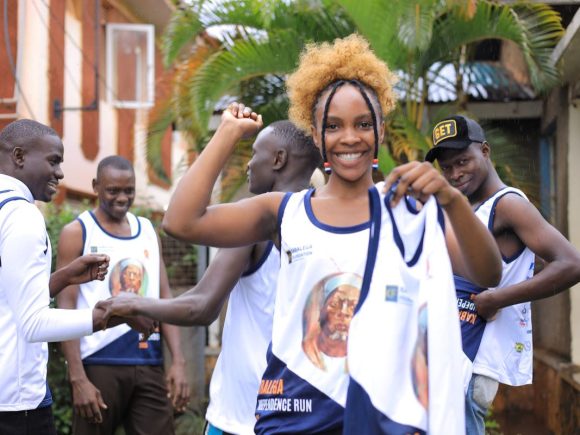

Across continents — young people are more connected than any previous generation in human history. With a smartphone and a data connection, a teenager in Kampala can join global debates, learn coding from Silicon Valley tutorials, stream Korean music, follow European political discourse, and collaborate with peers across oceans.
Connectivity has expanded opportunity. It has democratized knowledge, ambition, and access.
But beneath this expansion lies a quieter and more complex challenge: a growing crisis of belonging.
Identity, once shaped primarily by family, geography, language, religion, and shared memory, is increasingly mediated by algorithms, trends, and digitally amplified narratives. Many young people today are globally fluent yet locally uncertain — expressive and ambitious, but sometimes detached from the cultural anchors that once provided psychological stability and moral direction.
This is not simply a cultural concern. It is a leadership issue, a mental health issue, and a development issue unfolding across the world.
The Double-Edged Nature of Global Exposure
Digital globalization has dramatically widened the horizon of aspiration. A young person in rural Africa can imagine launching a tech startup. A student in Europe can organize climate activism that mobilizes globally. A creative in Latin America can distribute art without institutional gatekeepers. Youth are no longer confined to inherited possibilities.
This is progress.
But exposure without grounding can produce subtle instability. Constant comparison to curated global lifestyles fuels anxiety. Algorithm-driven content reinforces narrow definitions of success, beauty, and achievement. Cultural ideals circulate detached from context, creating pressure to emulate rather than interpret.
Across Africa, young people navigate Western media dominance alongside their own rich but sometimes underrepresented heritage. In Asia, traditional family structures coexist uneasily with hyper-modern urban culture. In Europe and North America, youth grapple with multicultural identities and fractured historical narratives. In each context, the tension is similar: how to reconcile inherited identity with globalized aspiration.
When global narratives dominate without local interpretation, young people may internalize an unspoken message — that modern success requires cultural detachment.
This creates a false dilemma between progress and belonging.
Identity as the Foundation of Leadership
Leadership is often framed in terms of skills, innovation, and strategic thinking. Yet leadership is also rooted in identity. It requires clarity about values, historical consciousness, and an internal compass that guides decision-making under pressure.
Throughout history, societies cultivated leadership through identity formation. Storytelling, ritual, language, apprenticeship, and communal responsibility were not decorative traditions — they were developmental frameworks.
In Africa, figures such as Omukama Cwa II Kabalega embodied leadership grounded in cultural continuity and collective purpose. In Asia, Confucian traditions shaped governance ethics. In Europe, civic identity was constructed through historical memory and philosophical debate. Indigenous communities across the Americas grounded leadership in land-based stewardship and intergenerational accountability.
Strong identity does not resist change; it stabilizes it.
When young people possess identity clarity, they innovate from a place of authenticity rather than imitation. They adapt global tools to local realities. They lead without needing to erase themselves.
In contrast, identity fragmentation can produce reactive leadership — driven more by external validation than internal conviction.
The Mental Health Dimension
The crisis of belonging is also psychological.
Digital environments amplify visibility of success while concealing struggle. Young people encounter endless images of achievement, beauty, wealth, and influence, often stripped of context. The result is comparison without perspective.
In every region of the world, rising youth anxiety and depression correlate with digital hyper-connectivity. Social belonging, once reinforced through physical community and shared experience, is increasingly negotiated through screens.
Belonging acts as a protective factor. It reinforces dignity, purpose, and resilience. Young people who feel anchored in family narratives, cultural identity, and community affirmation are better equipped to navigate digital pressures.
Cultural grounding is not nostalgia. It is preventative mental health infrastructure.
Intergenerational dialogue, language preservation, cultural festivals, and community mentorship are not symbolic exercises — they are stabilizing mechanisms in a rapidly shifting world.
Reclaiming Cultural Confidence Without Rejecting Modernity
The answer to the belonging crisis is not retreat from globalization. Nor is it rigid traditionalism.
The challenge is synthesis.
Young people must be empowered to see cultural identity not as limitation air jordan 13 retro black flint air jordan 1 high chrome release date april 2024, but as advantage — as a lens through which they interpret global knowledge. Cultural literacy and global literacy should reinforce one another.
Educational institutions worldwide can play a transformative role by integrating historical consciousness into leadership development. Youth programs can promote multilingualism that values indigenous and local languages alongside global ones. Community organizations can create platforms for creative reinterpretation of heritage rather than static preservation.
Identity must be lived, reimagined, and expressed — not merely instructed.
In Africa, this may involve reclaiming oral traditions, reinterpreting historical leadership models, and strengthening local institutions that affirm belonging. In Europe and North America, it may involve confronting fragmented historical narratives and fostering inclusive civic identities. In Asia and Latin America, it may involve balancing rapid modernization with continuity of communal values.
The contexts differ. The challenge is shared.
Digital Spaces as Identity Laboratories
Ironically, the same platforms contributing to identity uncertainty can become tools for renewal.
Across the globe, young creators are using digital spaces to document oral histories, revive traditional music and fashion, explore indigenous philosophy, and reframe cultural narratives for contemporary audiences. Diaspora communities reconnect with ancestral heritage through online archives and storytelling networks. Artists blend global genres with local rhythms. Historians digitize memory.
The digital sphere can dilute identity, but it can also democratize cultural revival.
The critical question is whether youth engage these platforms from a position of confidence or cultural displacement.
When digital tools are used intentionally, they can expand belonging rather than erode it.
Belonging as a Development Priority
Development discourse often prioritizes employment, technological advancement, and economic growth. These are essential. Yet belonging determines how young people engage with opportunity.
Youth who feel culturally grounded are more likely to invest in their communities, demonstrate civic responsibility, exercise ethical leadership, innovate contextually, and resist destructive social pressures. Belonging transforms capacity into contribution.
Across Africa’s demographic expansion, Europe’s migration debates, Asia’s urban transitions, and the Americas’ multicultural tensions, one truth emerges: identity security shapes social stability.
Belonging is not peripheral to development. It is foundational.
Toward an Identity-Confident Generation
The future will be shaped by a generation navigating unprecedented complexity. Artificial intelligence, climate change, geopolitical shifts, and economic volatility will demand adaptability. But adaptability without identity can become drift.
What the world requires is not only skilled youth, but self-assured youth — individuals capable of engaging global complexity without losing cultural clarity.
This demands intentional investment in spaces where identity is explored, debated, celebrated, and renewed. Cultural institutions, leadership forums, heritage initiatives, digital storytelling platforms, and intergenerational dialogue programs are not secondary to youth development; they are structural to it.
Young people do not need to choose between global relevance and cultural belonging.
They need environments that allow them to achieve both.
Because the future will not belong to those who abandon their identity in pursuit of modernity, nor to those who retreat from change in defense of tradition.
It will belong to those who understand themselves deeply enough to move confidently through the world — rooted, adaptive, and capable of leading across cultures without losing their own.
Youth today are more connected than ever.
The question is whether we will help them feel equally rooted.
African youth are more connected than ever — but many feel less rooted. Why belonging may be the missing link in leadership and development.