
Heritage as Soft Power: Can Culture Reshape Diplomacy and Catalyze Global Peace?
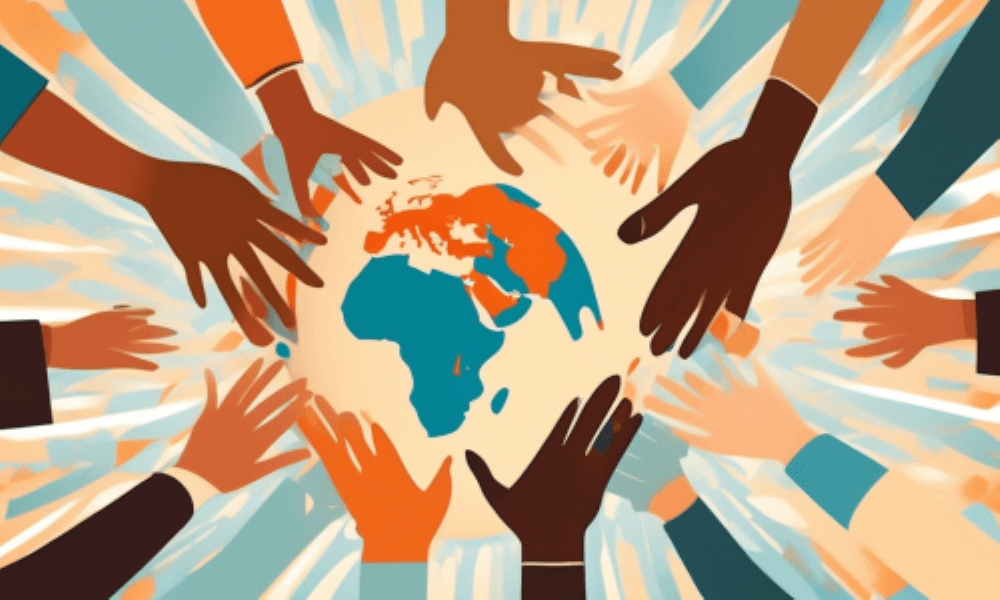
The 21st century has not been kind to the institutions once assumed to guarantee stability. Political systems promise representation yet frequently produce polarization. Religious institutions preach unity yet are often entangled in division. International alliances pledge cooperation yet struggle to prevent war. Across continents, citizens watch negotiations stall, conflicts harden, and rhetoric escalate.
Politics has not consistently delivered peace. Religion, though profoundly meaningful to billions, has at times been instrumentalized to justify conflict rather than resolve it.
This reality forces a difficult question: if our dominant systems of power and belief are failing to reduce global tension, what alternative forces might offer a more enduring path to peace?
Increasingly, the question is: Does culture hold a place in global diplomacy?
The Quiet Power Beneath Power
Unlike military force or economic leverage, cultural influence does not coerce. It attracts. It humanizes. It builds familiarity where suspicion once existed. Culture operates through shared stories, artistic expression, heritage preservation, education, and collective memory. It reminds societies of what they value rather than what they fear.
This is the essence of soft power.
When a country’s literature is studied abroad, when its music resonates across borders, when its historical experiences are understood rather than caricatured, diplomatic engagement becomes less adversarial. Cultural familiarity reduces the psychological distance that fuels conflict.
Where politics negotiates interests, culture negotiates identity.
Identity, more than interest, often drives conflict.
When Politics Divides and Religion Polarizes
Modern political discourse is structured around competition. Elections create winners and losers. Parliamentary debates amplify ideological divides. Geopolitical rivalry rewards strategic maneuvering rather than mutual understanding. Even well-intentioned political actors are constrained by domestic pressures that discourage compromise.
Religion, too, has been double-edged. At its best, it inspires compassion, service, and moral clarity. At its worst, it becomes a boundary marker — defining who belongs and who does not. Across history, sacred narratives have been invoked to legitimize violence as often as to prevent it.
This does not mean politics and religion are inherently destructive. They Nike Taupe & White Dunk Low Sneakers remain foundational to human society. But when politicized faith and polarized governance dominate public life, dialogue narrows.
Culture offers a different vocabulary.
Culture as Common Ground
Cultural heritage rarely begins as a battlefield. It begins as shared inheritance — language, music, architecture, cuisine, oral history, art, philosophy, and collective memory. Even societies divided by ideology often share deeper cultural threads that predate modern disputes.
Consider how post-conflict reconciliation efforts frequently turn to cultural restoration. Rebuilding museums, restoring heritage sites, reviving traditional arts, and preserving archives are often early steps in healing fractured societies. Why? Because culture provides a neutral space where identity can be reaffirmed without immediately invoking political grievance.
The global recognition of cultural heritage as a peace-building asset is reflected in initiatives such as the UNESCO and its UNESCO Memory of the World Programme. These frameworks emphasize that safeguarding collective memory is essential not only for preservation, but for preventing cultural erasure — a frequent precursor to conflict.
When communities feel their history is respected, they are less likely to radicalize in defense of it.
Global Diplomacy Through Cultural Exchange
Around the world, cultural diplomacy has quietly reshaped international relations. Academic exchanges build generations of leaders who understand one another’s societies. Film festivals introduce audiences to human stories beyond political headlines. Art exhibitions foster conversation without requiring agreement.
Music collaborations bridge borders that embassies struggle to cross. Youth nike dunks sandy bodecker auction ebay exchanges cultivate air jordan 1 high chrome release date april 2024 empathy long before formal diplomatic negotiations begin.
These forms of engagement do not eliminate geopolitical competition, but they soften its edges.
When adversarial nations maintain cultural exchange, the probability of dehumanization decreases. It becomes harder to caricature a society whose poetry you have read, whose scholars you have met, whose artists you admire.
Cultural familiarity does not erase disagreement — but it reframes it within shared humanity.
Africa as a Case in Point
Africa offers a powerful illustration of culture’s diplomatic potential. The continent’s civilizational depth, oral traditions, artistic diversity, and communal philosophies provide resources uniquely suited to peacebuilding.
Cultural institutions historically exercised influence not merely through political authority, but through cultural legitimacy and shared identity. Leadership narratives emphasized continuity, moral authority, and community cohesion.
Figures such as Omukama Cwa II Kabalega are remembered not only for resistance and sovereignty, but for embodying values that transcend their era. These narratives contribute to a broader continental memory that connects struggles for dignity across borders.
Africa’s global cultural impact is already visible in music, fashion, literature, and diaspora communities. Yet its diplomatic strategies have not always fully institutionalized culture as a peace-building instrument. Investing in cultural research centers, memorial lectures, heritage restoration, and creative industries can reposition African states not merely as political actors, but as civilizational contributors to global dialogue.
The Psychology of Peace
Peace is not merely treaties. It is a perception.
When populations feel unseen or misrepresented, resentment grows. Cultural diplomacy counters misrepresentation by amplifying authentic narratives. It creates channels through which societies can define themselves rather than be defined by conflict-driven headlines.
Culture also operates at the emotional level. Where political agreements appeal to rational calculation, cultural exchange appeals to empathy. Empathy lowers the temperature of hostility. It humanizes the “other.”
In deeply polarized societies, art often becomes the first bridge. Shared festivals continue when political negotiations stall. Collaborative research persists when diplomatic channels freeze. Cultural heritage reminds communities of interconnected histories long before modern borders existed.
Can Culture Succeed Where Other Systems Have Failed?
It would be naïve to claim that culture alone can end war. Armed conflict arises from structural inequalities, resource competition, power imbalances, and ideological extremism. Cultural diplomacy cannot substitute for sound governance or economic justice.
But it can reshape the conditions in which peace becomes possible.
Where politics has failed to inspire trust, culture can rebuild it gradually. Where religion has been weaponized, shared heritage can restore common ground. Where diplomacy has hardened into strategic rivalry, cultural exchange can reopen human connection.
Peace requires more than negotiation. It requires imagination — the ability to see former adversaries as partners in a shared future. Culture nourishes imagination.
In a world fatigued by ideological confrontation, perhaps the most radical diplomatic strategy is to invest in what unites rather than what divides.
Heritage is not nostalgia. It is identity preserved with intention. When projected thoughtfully across borders, it becomes soft power capable of shaping perception, building trust, and catalyzing peace.
Politics may draft agreements. Religion may guide conscience. But culture, quietly and persistently, builds the emotional architecture within which peace can endure.
The question is not whether culture matters in global diplomacy.
The question is whether nations are prepared to treat it as a peace-building tool it has always had the potential to be.