
Agricultural Enterprise, Trade and Development: A Golden Bullet for Africa’s Transformation
Africa stands at a defining moment in its development journey. Across the continent, governments, businesses, communities and young people are searching for pathways that can create jobs, strengthen livelihoods, expand trade and build economies that are more productive, resilient and self-sustaining.
One of the most powerful answers may already be in Africa’s hands: agriculture.
For generations, agriculture has been at the heart of African life and livelihoods. Yet its potential extends far beyond food production. Properly developed, agriculture can become a powerful engine of enterprise, industrialisation, employment, regional trade, innovation and inclusive economic growth.
The question is no longer simply how Africa can produce more.
The bigger question is: How can Africa create more value from what it produces?
That is where agricultural enterprise and trade become central to the continent’s transformation.
Beyond Farming: Building an Agricultural Economy
Agriculture should no longer be viewed simply as a rural activity or a means of subsistence. It is a vast economic ecosystem connecting farmers to input suppliers, financial institutions, processors, manufacturers, transporters, traders, technology companies, exporters and consumers.
When these connections function effectively, agriculture becomes more than farming. It becomes agribusiness.
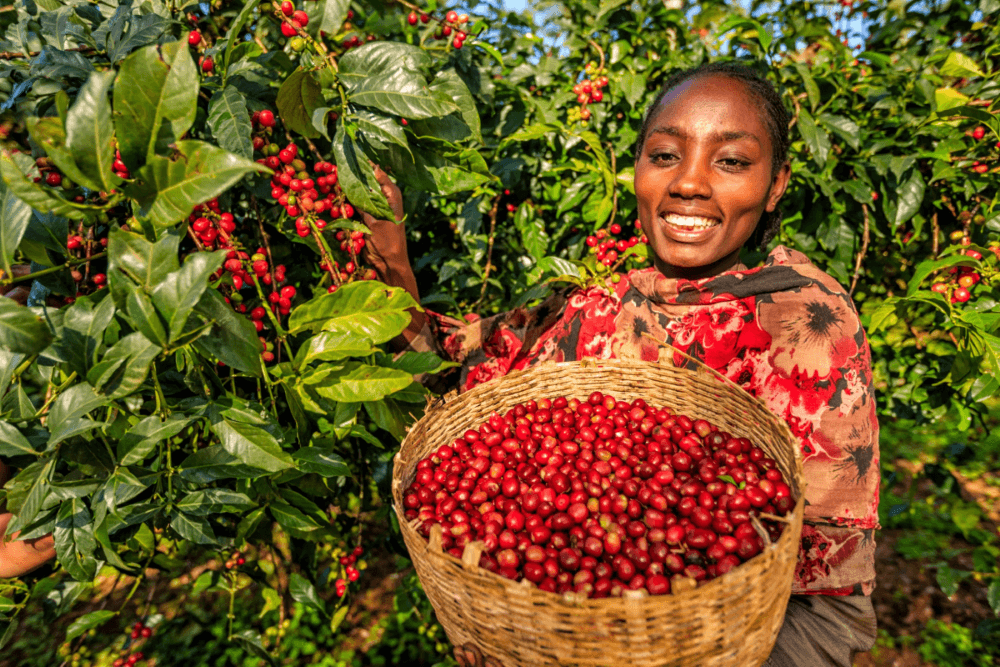
A coffee farmer, for example, is not simply producing coffee beans. That farmer is part of a much larger value chain involving seedlings, soil management, harvesting, processing, transportation, packaging, branding, financing and international trade.
The same principle applies to cocoa, cotton, tea, fruits, grains, livestock, cassava and countless other African agricultural products.
The opportunity is therefore to build stronger value chains in which African producers and enterprises capture a greater share of the economic value generated from their own resources.
Africa must move from producing commodities to building competitive agricultural enterprises around them.
From Raw Materials to Value Addition
For too long, much of Africa’s agricultural potential has left the continent in relatively low-value forms, while finished and processed products return to African markets at significantly higher prices.
This pattern represents more than a trade imbalance. It is a lost opportunity for jobs, industrial development, skills and wealth creation.
Value addition offers a different pathway.
When coffee is roasted and packaged locally, when fruit is processed into juice, when cassava is transformed into industrial products, when cotton becomes textiles, or when agricultural products are converted into branded consumer goods, new economic opportunities emerge at every stage.
Factories require workers. Processing requires technical skills. Businesses require finance. Products require packaging, logistics, marketing and distribution. Export markets require standards and certification.
In this way, agriculture becomes a gateway to industrialisation.
The transformation of Africa’s agricultural sector must therefore focus not only on increasing production, but on building the infrastructure, skills, technology and enterprises necessary to process, package, market and trade African products competitively.
Trade as a Driver of Transformation
Agricultural transformation cannot happen in isolation from trade.
Africa has enormous agricultural diversity. Different regions produce different crops, livestock and food products, creating significant opportunities for trade across borders. A stronger continental market can enable producers to reach larger consumer bases, allow enterprises to scale, and encourage investment in processing and logistics.
The African Continental Free Trade Area provides an important framework for strengthening this opportunity.
But agreements alone will not transform agricultural trade. Roads, storage facilities, cold chains, quality standards, digital systems, financial services and efficient border processes are equally important.
African producers must be able to move products efficiently from farm to market and from market to market.
A farmer should not lose income because produce cannot reach a buyer in time. A processor should not be unable to expand because markets remain fragmented. And an African enterprise should not struggle to compete simply because moving goods across an African border is unnecessarily expensive or complicated.
The ambition should be clear: a more connected African agricultural market in which African businesses can produce, process and trade at scale.
Making Agriculture Attractive to Africa’s Young People
No conversation about Africa’s future can ignore its young population.
Millions of young Africans enter the labour market every year. Creating meaningful economic opportunities for this generation will require sectors capable of absorbing talent, encouraging entrepreneurship and generating sustainable incomes.
Agriculture can be one of those sectors—but only if we change how it is perceived.
The agriculture of tomorrow should not be defined by subsistence alone. It should involve technology, innovation, finance, research, logistics, digital platforms, renewable energy, processing and modern marketing.
Young people can become agritech entrepreneurs, farm managers, processors, exporters, researchers, logistics specialists, digital marketers and value-chain investors.
This is how agriculture becomes a sector of opportunity rather than a sector of last resort.
Africa needs to make agriculture aspirational.
Women and Rural Communities at the Centre
Agricultural transformation must also be inclusive.
Women and smallholder farmers are central to Africa’s food systems, yet many continue to face barriers to land, finance, technology, markets and productive assets.
Creating stronger agricultural enterprises means ensuring that those who produce the food and commodities also have opportunities to participate in the value created around them.
Cooperatives, producer organisations, community enterprises and inclusive value chains can help strengthen bargaining power and connect small-scale producers to larger markets.
The objective should not simply be to increase the number of people participating in agriculture.
It should be to increase the number of Africans who own productive assets, build enterprises, participate in value addition and benefit fairly from trade.
That is the difference between agricultural activity and agricultural transformation.
A Climate-Resilient Agricultural Future
Africa’s agricultural transformation must also be environmentally responsible.
Climate change, soil degradation, water stress and changing weather patterns are already affecting agricultural productivity and livelihoods across many communities.
This makes climate-smart agriculture not merely an environmental consideration, but an economic necessity.
Healthy soils, responsible water management, agroforestry, improved seed varieties, irrigation, renewable energy, sustainable land management and better agricultural practices can help build more resilient production systems.
The objective should be to produce more while protecting the natural resources upon which future production depends.
True transformation must be productive, inclusive and sustainable.
Turning Africa’s Agricultural Potential into Prosperity
Africa does not lack agricultural potential. What is required is a stronger ecosystem capable of converting that potential into lasting economic value.
Governments must create enabling policies and infrastructure. Financial institutions must expand access to appropriate capital. Researchers must develop practical and locally relevant innovations. Businesses must invest in processing, logistics and markets. Development partners must support scalable solutions. And farmers must be recognised not merely as beneficiaries, but as entrepreneurs and economic actors.
Most importantly, Africa must change the way it thinks about agriculture.
Agriculture is not simply a development challenge.
It is one of Africa’s greatest economic opportunities.
It can create jobs.
It can strengthen food security.
It can drive industrialisation.
It can expand intra-African trade.
It can empower young people and women.
It can strengthen rural economies.
And it can help Africa build greater economic self-reliance.
The journey from agricultural potential to prosperity begins by connecting the pieces: the farmer to the enterprise, the enterprise to the market, the market to the region, and the region to the world.
Africa’s future should not be defined by the export of raw potential and the import of finished prosperity.
It should be defined by a continent that produces, processes, trades and creates value from its own resources.
From the farm to the factory.
From the village to the city.
From local enterprise to continental trade.
From agricultural potential to African prosperity.
Agriculture can be one of Africa’s golden bullets for transformation—but only if we turn production into enterprise, enterprise into trade, and trade into shared prosperity.

All Categories
- 100 Years of Kabalega
- Advocacy
- African Proverbs
- Annual Events
- Archives
- Blog
- Board of Directors
- Community Empowerment
- Culture
- Education
- Environment
- Events
- Galleries
- Initiatives
- Kabalega Cultural Square
- Kabalega Tourism Trail
- Latest News
- Membership
- Omukama Kabalega
- Opportunities
- Our Executive Team
- Programmes
- Projects
- Social Livelihood Improvement
Recent Posts


Join us to keep Omukama Cwa II Kabalega's legacy alive.
+256-200-900935
info@kabalegafoundation.org