
Bunyoro’s Coffee Moment: Turning an Emerging Robusta Frontier into Wealth for All
International Coffee Day 2026 calls for stronger investment, better quality, value addition and partnerships to grow household prosperity in the oil-rich sub-region.
HOIMA CITY, UGANDA | 8 OCTOBER 2026
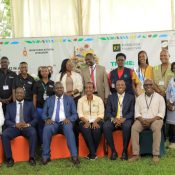
Bunyoro-Kitara’s growing role in Uganda’s coffee industry took centre stage on 8 October 2026, as government, cultural leaders, farmers, researchers and private-sector actors gathered at Rukurato Gardens in Hoima City for Uganda’s national International Coffee Day commemoration. Held under the theme “Wealth for All: Exploring Opportunities in Coffee in the Bunyoro Oil-Rich Sub-Region,” the event called for a deliberate shift from viewing coffee simply as a crop to developing it as a competitive business capable of creating jobs, strengthening household incomes and retaining more value within the region.
The commemoration formed part of Kabalega Independence Week 2026, organised by Kabalega Foundation in partnership with Bunyoro-Kitara Kingdom, the Ministry of Agriculture, Animal Industry and Fisheries (MAAIF), the Uganda Coffee Federation (UCF) and other sector partners. Under the wider week’s theme, “Heritage, Agribusiness Transformation & Regional Enterprise,” the coffee gathering connected the legacy of Omukama Cwa II Kabalega—particularly the principles of self-reliance, unity and productive capacity—with the practical work of building a stronger regional economy.
A Growing Coffee Frontier with a Clear Economic Opportunity
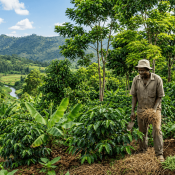
Bunyoro is emerging as an important Robusta-growing area. In remarks delivered on behalf of the Ministry of Agriculture’s Coffee Development Department, Eunice Kabiibi Mutungi noted that the sub-region is estimated to produce about 300,000 60-kilogram bags annually, with coffee expanding across Hoima and neighbouring districts, including Kakumiro, Kagadi, Kibaale, Masindi and Kikuube.
The opportunity is unfolding alongside major oil and gas investment that is reshaping infrastructure, urban demand and commercial activity in the Albertine region. Speakers stressed that oil and agriculture should not be treated as competing priorities. Rather, the roads, power, logistics, hospitality, finance and expanding consumer markets associated with economic growth can also support coffee production, processing and trade.
The Prime Minister of Bunyoro-Kitara Kingdom, speaking as Chief Guest and conveying greetings from His Royal Majesty Rukirabasaija Omukama Dr. Solomon Gafabusa Iguru I, emphasised that oil is finite, while well-organised agriculture can sustain livelihoods for generations. He urged the region to invest in people, productive land, agriculture and enterprise so that wider economic change translates into tangible benefits for ordinary households.
From Heritage to Household Wealth
For Kabalega Foundation, the commemoration was part of a broader effort to translate historical identity into practical development. Executive Director Dr. James Isagara Kisoro has emphasised that the legacy of Omukama Cwa II Kabalega should be reflected not only in ceremonies and history, but also in productive farms, thriving enterprises, skilled young people and stronger communities.
That connection is particularly meaningful in Bunyoro, where the Kingdom’s leadership noted that coffee has long-standing cultural associations, including its place in friendship and the traditional institution of Omukago. The Kingdom adopted coffee as a strategic cash crop in 2020 and has since promoted it as an avenue for household income and wider participation in the agricultural economy.
The Kingdom’s message was direct: land should be treated as a productive resource, and coffee should be approached as an enterprise rather than subsistence activity. Opportunities extend beyond growing beans to seedling nurseries, transport, aggregation, processing, roasting, packaging, branding, cafés, tourism, digital marketing, research and export. These activities can create entry points for young people, women and local businesses across the value chain.
Productivity and Quality Must Come First
Participants were reminded that expanding the area under coffee will not automatically deliver prosperity. Farmers need suitable, high-quality planting material, good field establishment, soil-fertility management, moisture conservation, pruning, pest and disease control, and the rehabilitation of ageing or unproductive trees. Climate resilience—including soil cover, appropriate shade and water management—must be integrated into everyday farm practice.
Quality is equally critical. Harvesting mature cherries, drying coffee correctly, separating grades, maintaining clean processing facilities and storing beans properly all affect the value farmers and businesses can earn. The Ministry stressed that a good harvest can lose value through poor post-harvest handling, while the Uganda Coffee Federation called for dependable demand and stronger commercial relationships that reward farmers for quality.
Market readiness is becoming more important, too. The Ministry highlighted farmer registration, farm geolocation and traceability as essential tools for connecting producers to services and buyers and protecting access to export markets. With the European Union Deforestation Regulation’s main application date for large and medium operators approaching on 30 December 2026, sector actors were urged to strengthen farm-level information and coordinate on affordable compliance systems.
A Call for Investment Across the Value Chain
Uganda’s recent export performance offers a strong platform, but speakers cautioned that the next stage of growth must be built on productivity, quality, reliability and value addition—not volume alone. The Ministry reported that Uganda exported about 8.1 million 60-kilogram bags worth approximately US$2.2 billion in the 12 months from September 2025 to August 2026. In a global market where supply is projected to increase, producers and businesses must work to make every acre more productive and every bag more valuable.
Uganda Coffee Federation President Robert Byaruhanga presented five priorities for sustained sector growth: targeted support for coffee development in Bunyoro; funded preparation for traceability and EUDR requirements with meaningful private-sector participation; affordable finance for indigenous coffee enterprises; stronger support for value addition from seed to cup; and investment in climate resilience.
The Federation argued that more Ugandan businesses should be able to move beyond growing, aggregation and delivery to exporters’ gates into processing and export. Access to long-term investment and competitively priced working capital, alongside technology, infrastructure and market access, will be important to expand local participation and retain more earnings in Uganda.
The Ministry also encouraged the development of domestic coffee consumption, including locally roasted Ugandan coffee in hotels, restaurants, offices and hospitality facilities across the Albertine region. For a rapidly developing city such as Hoima, this presents an opportunity to connect local production with growing demand while creating businesses in roasting, packaging, hospitality and related services.
From Celebration to Practical Commitments
The Bunyoro-Kitara Kingdom highlighted its coffee technology demonstration gardens, including the Musaijamukuru Coffee Technology Demonstration Garden in Kikuube and initiatives in Isunga in Kagadi and Bujenje in Masindi. Its longer-term ambition is to establish modern demonstration gardens in every county, supported by nursery capacity and partnerships that enable farmers to see and learn improved production methods.
The Kingdom also pointed to the planned mobilisation and distribution of 100,000 improved coffee seedlings through the Kabalega Independence Week initiative. The initiative is intended to be more than a distribution exercise: seedlings must be accompanied by farmer training, extension support, proper establishment and continued management if they are to translate into productive farms and stronger household incomes.
The Fourth Kabalega Independence Run, held on 10 October as part of the wider week, was designed to contribute to this objective. Proceeds from running-kit sales are intended to support the procurement and distribution of high-quality coffee seedlings and extension training for smallholder farming households across Bunyoro. The long-term measure of success will be the farmers reached, the quality of training delivered and the sustainability of the benefits created.
A Shared Responsibility for “Wealth for All”
The central message from International Coffee Day 2026 was that no single institution can transform Bunyoro’s coffee economy alone. Government has a role in policy, research, extension and infrastructure; the Kingdom in community mobilisation and cultural leadership; the private sector in investment, processing and markets; development partners in technology and capacity building; and farmers in applying sound production practices and protecting quality.
For Kabalega Foundation, this shared agenda reflects the contemporary meaning of Omukama Cwa II Kabalega’s legacy: turning self-reliance into productive capacity, enterprise and opportunity. The ambition is not simply to grow more coffee, but to build a value chain in which farmers earn better returns, local businesses grow, young people and women participate meaningfully, and a greater share of value remains in the region.
As the national commemoration moved from speeches to engagement with exhibitors and businesses, the call was clear: Bunyoro’s coffee opportunity must be backed by sustained investment, practical skills, quality production, climate resilience, traceability, finance and reliable markets. If these elements advance together, coffee can become a durable source of wealth alongside the oil and gas economy—linking the region’s heritage to a more prosperous and self-reliant future.
Speech Attachments

All Categories
- 100 Years of Kabalega
- Advocacy
- African Proverbs
- Agriculture & Agribusiness
- Annual Events
- Archives
- Blog
- Board of Directors
- Community Empowerment
- Culture
- Education
- Environment
- Events
- Galleries
- Initiatives
- Kabalega Cultural Square
- Kabalega Independence Week
- Kabalega Independence Week 2026
- Kabalega Tourism Trail
- Latest News
- Membership
- Omukama Kabalega
- Opportunities
- Our Executive Team
- Programmes
- Projects
- Social Livelihood Improvement
Recent Posts
Join us to keep Omukama Cwa II Kabalega's legacy alive.
+256-200-900935
info@kabalegafoundation.org